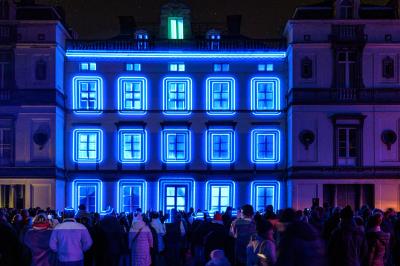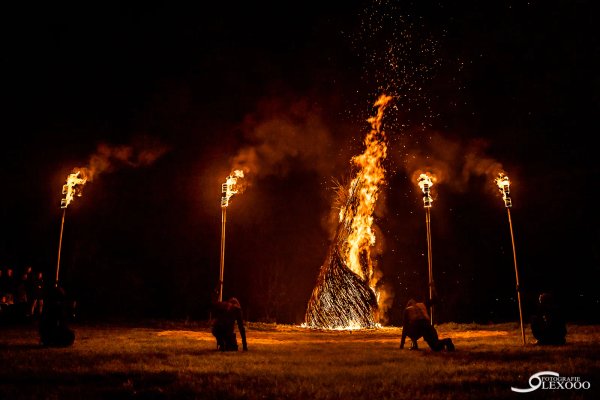
An ordinary façade that suddenly breathes, a tree whose leaves light up in colours that don't exist, a logo that seems to float above the stage. Projection mapping turns a static object into a story painted exactly onto its shape. For event planners, it's one of the most striking ways to make a moment feel huge, but the technique behind it stays a black box for many.
In this article, we explain how projection mapping actually works, the steps we take from first idea to live show, and how hologram projection compares. No marketing talk, just the real story from our experience on location.
What is projection mapping?
Projection mapping, sometimes called video mapping, is the projection of visual effects, light and moving video content onto a physical surface. That surface can be almost anything: a building, a façade, a tree, the ground, a piece of set design or a purpose-built structure. Anything that reflects light can carry the imagery.
The big difference with ordinary projection (think a cinema screen or a PowerPoint on a wall) lies in the relationship between content and object. With ordinary projection, the surface is a neutral plane. With projection mapping, the surface is the subject. The video content is matched to the millimetre to the shape, angles, windows and protrusions of the object, so that light and image seem to merge with the architecture. A window can light up as if someone were standing behind it, a wall can appear to crack open, a façade can transform into an aquarium.
How does projection mapping work technically?
The basics are simple: a high-output projector sends an image onto a surface. The complexity is in everything around it.
Mapping the surface
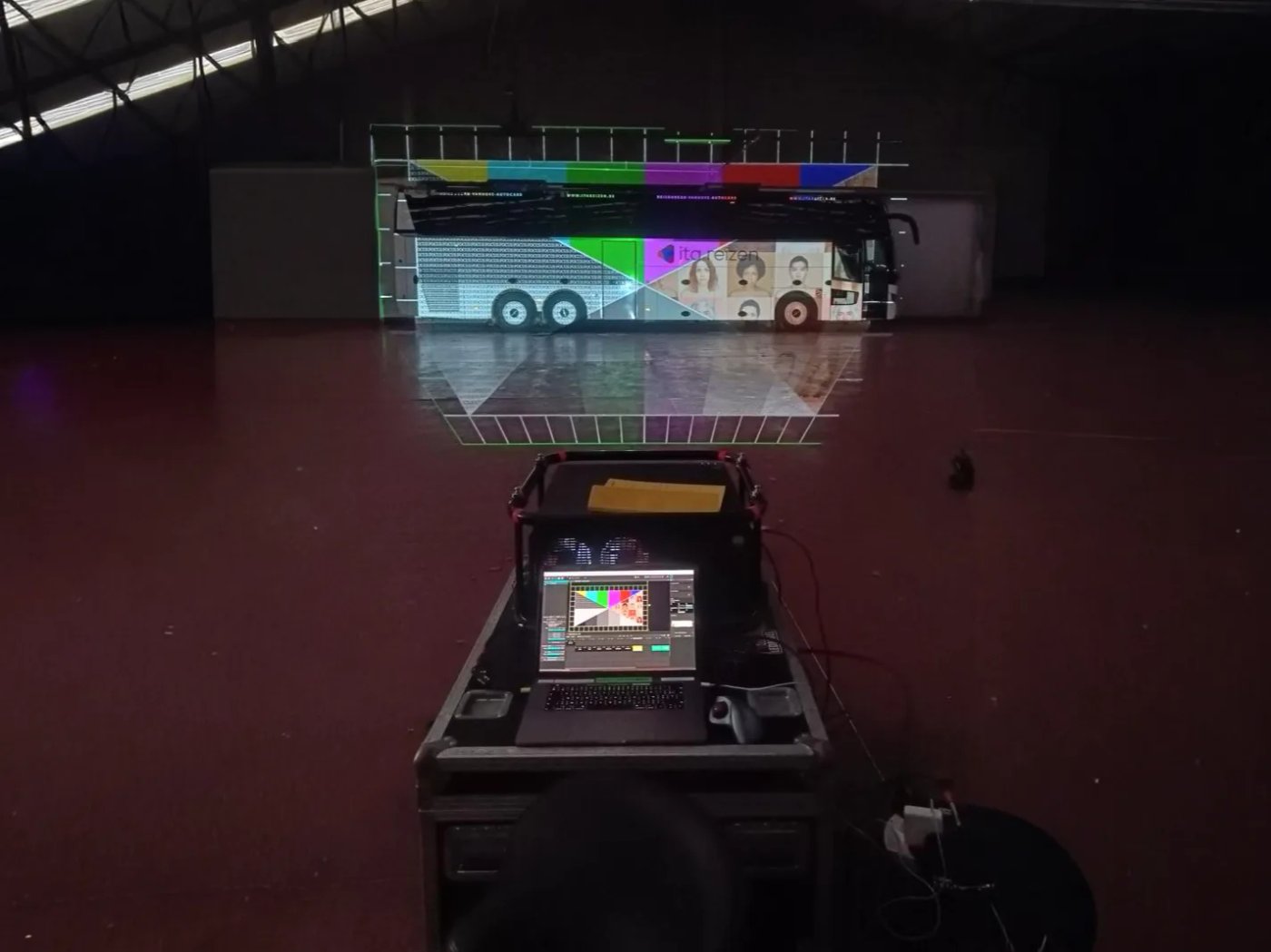
For a flat surface with simple proportions, we can discuss the specs in advance and create the imagery entirely from a distance. For more complex buildings, we plan a site visit: photos, measurements and, where needed, 3D scans. We translate that data into our software, so the virtual content matches the real object perfectly.
Cutting out the content (masking)
In our video content, the building or object is literally cut out. Only the surface we want to light up receives the image. That makes it stand out sharply against its surroundings, with everything else falling away visually.
Brightness and surface
The lighter the surface, the stronger the effect. White façades reflect the most. Projection mapping is also possible on a dark or black building, but the reflection effect is weaker. In that case, we often combine it with lasers, so we have a solution for almost any building. For large-scale projections, we use projectors of up to 40,000 lumens.
Distance, angle and line of sight
Every projector has a specific throw angle. We calculate the optimal distance so that the image lands sharp and in the right proportions on the surface. For large or complex surfaces, we use multiple projectors at the same time, both for brightness and for resolution. The projector also needs an unbroken line of sight: no people or objects can pass between the projector and the surface during the show. On location, our technicians fine-tune everything for an optimal result.
From concept to delivery, our process
A successful projection mapping starts long before the first lumen hits the building.
Briefing and theme
We always start from your event. What's the theme, what styling are you working with, what should the audience feel the moment the projection comes on? Visual effects, abstract visuals, story arcs, text and branding are all possible. We make our content bespoke, so it doesn't feel like a generic video loop but like part of your story.
Preparation and production
For flat surfaces, we work from plans and specs. For complex buildings, we come on site for photos, measurements and, if useful, 3D scans. Our designers translate that input into an immersive experience: animations, effects, branding and story arcs are layered up and tested in a digital twin of the surface.
Set-up and calibration on location
On the day itself, we install the projectors, cabling and control. Because no site is ever perfect, our technicians fine-tune the mapping on location. Only when the content sits on the object with millimetre precision do we give the green light.
Combining with live performers
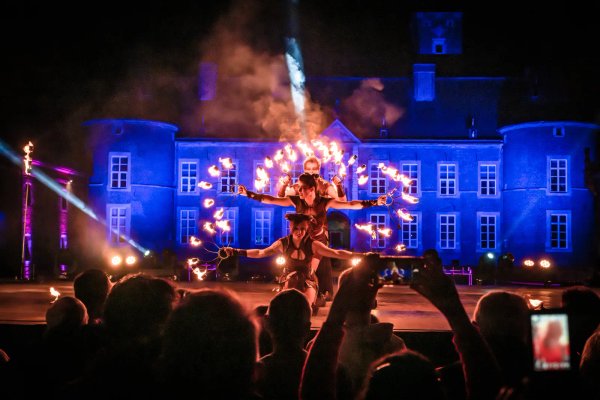
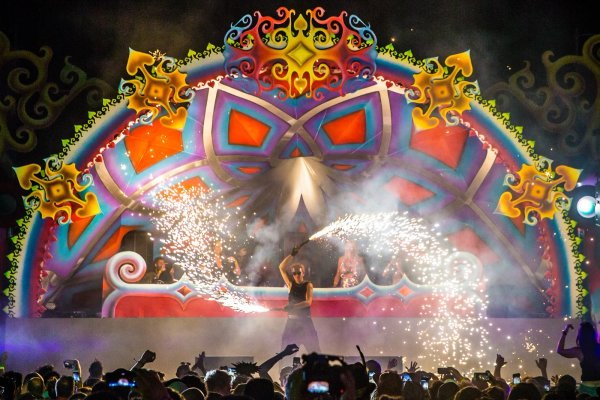
Projection mapping works exceptionally well alongside live performance. A dancer, a fire artist or a bespoke light show can interact with the imagery, making the overall effect far stronger than video alone. The audience no longer sees a projection, but a world in which everything works together.
Hologram projection, how does it work?
Hologram projection is often mentioned in the same breath as projection mapping, but the technique behind it is different. With a hologram, the image appears to float freely in space, without the audience seeing any carrier.
In practice, this usually works with the Pepper's ghost principle or with gauze screens (a kind of semi-transparent mesh). A bright projection is sent onto the transparent material or via an angled foil. The audience looks through it and only sees the image itself, not the screen. As a result, the object (a product, a speaker, a logo) seems to hang in mid-air.
We often use hologram projection for a wow moment on a more contained surface: on stage, inside a tent setup or at a product reveal. Projection mapping is generally larger and architectural, holograms are more intimate and theatrical. You'll find both techniques on our installations page.